EBSCO · UX · DESIGN SYSTEMS
Modernizing the engine without stopping the train.
EBSCO's research platforms sit inside libraries and universities worldwide — used by millions, wired into hundreds of millions in revenue, and impossible to take offline for a redesign. I joined the UX team for the multi-year modernization of its core discovery experience: research, interaction design, prototyping, and the Pecan design system — change made carefully enough that researchers' daily work never broke.
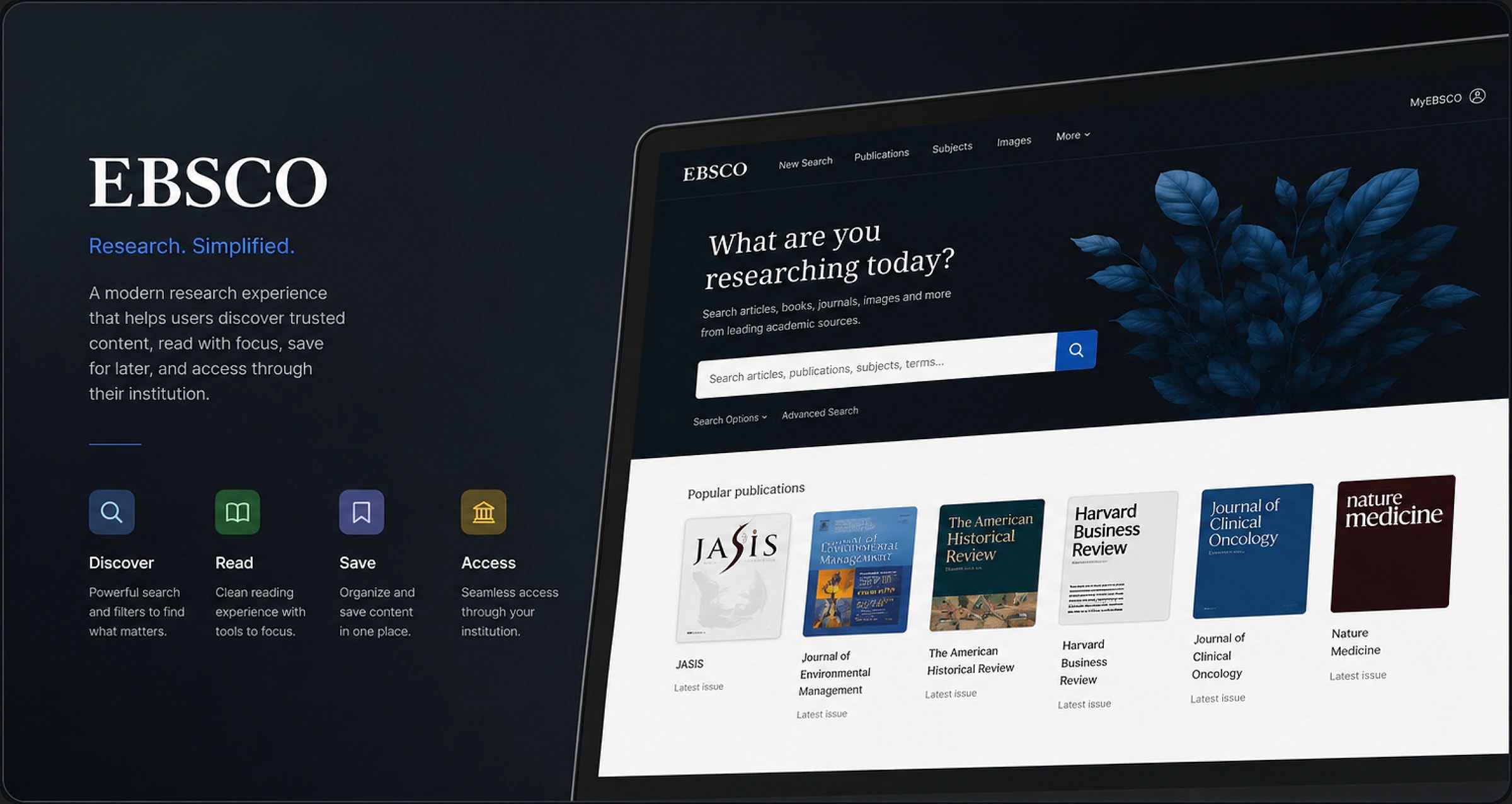
01 / REIMAGINING A LEGACY PRODUCT
No big bang.
Years of shifting expectations and accumulated design debt said rewrite it. The workflows, customers, and revenue running on top of it said don't you dare. The strategy threaded that needle:
- Incremental, research-driven evolution — never a risky rewrite.
- Customer insights, testing, and measurement guiding every decision.
- Modernization that protected existing workflows and revenue.
The goal was simple: help users get to deeper knowledge, faster.
02 / BUILDING FROM UNDERSTANDING
Research before pixels.
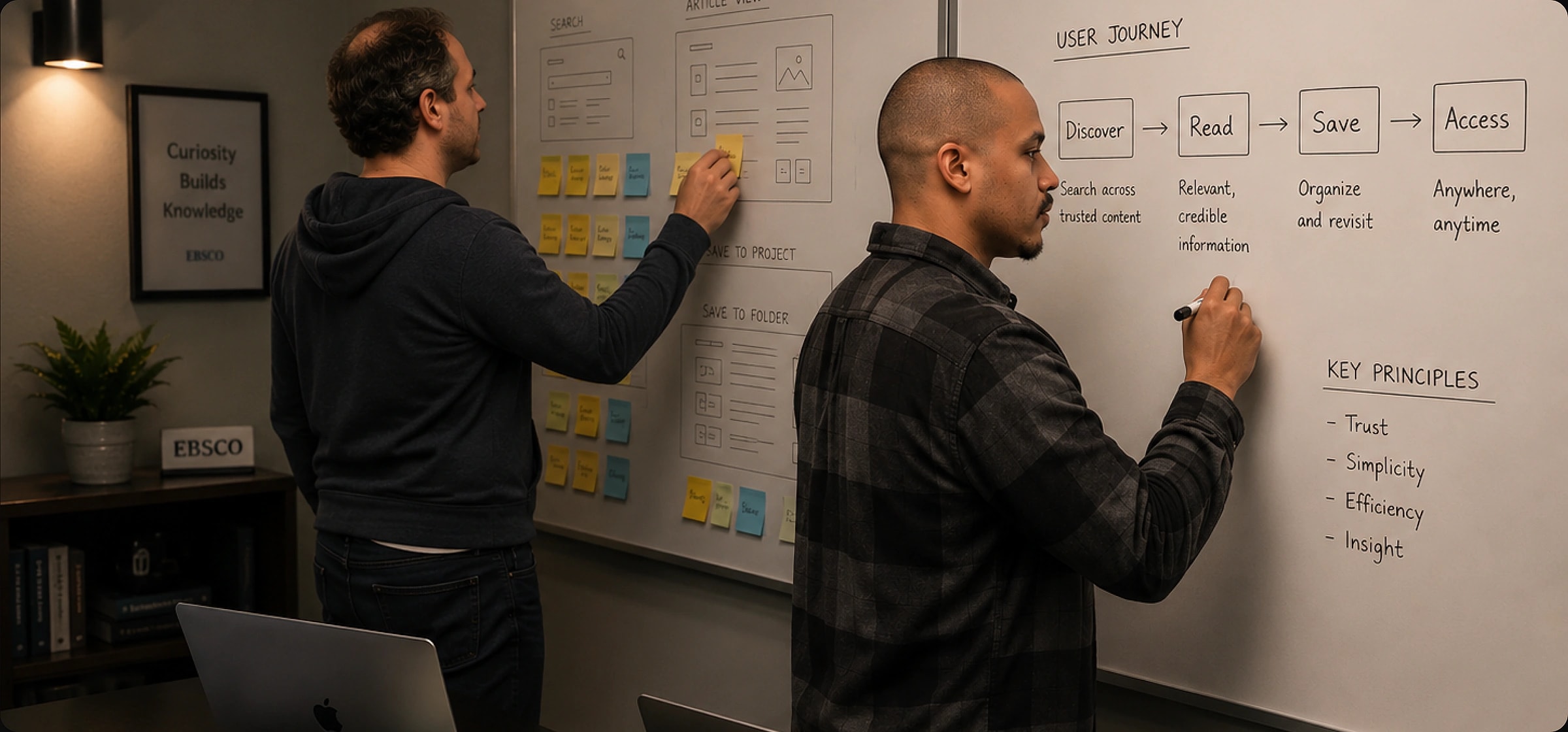
Four very different users share one platform — researchers, students, librarians, administrators — and none of them used it quite the way anyone assumed. Usability studies, customer feedback, and behavioral data surfaced opportunities across discovery, search, navigation, personalization, accessibility, and mobile.
Those insights became personas, journey maps, user flows, and experience principles — one shared vision for teams to align on instead of guesses to argue about.
03 / DESIGNING SYSTEMS, NOT SCREENS
Screens expire. Patterns compound.
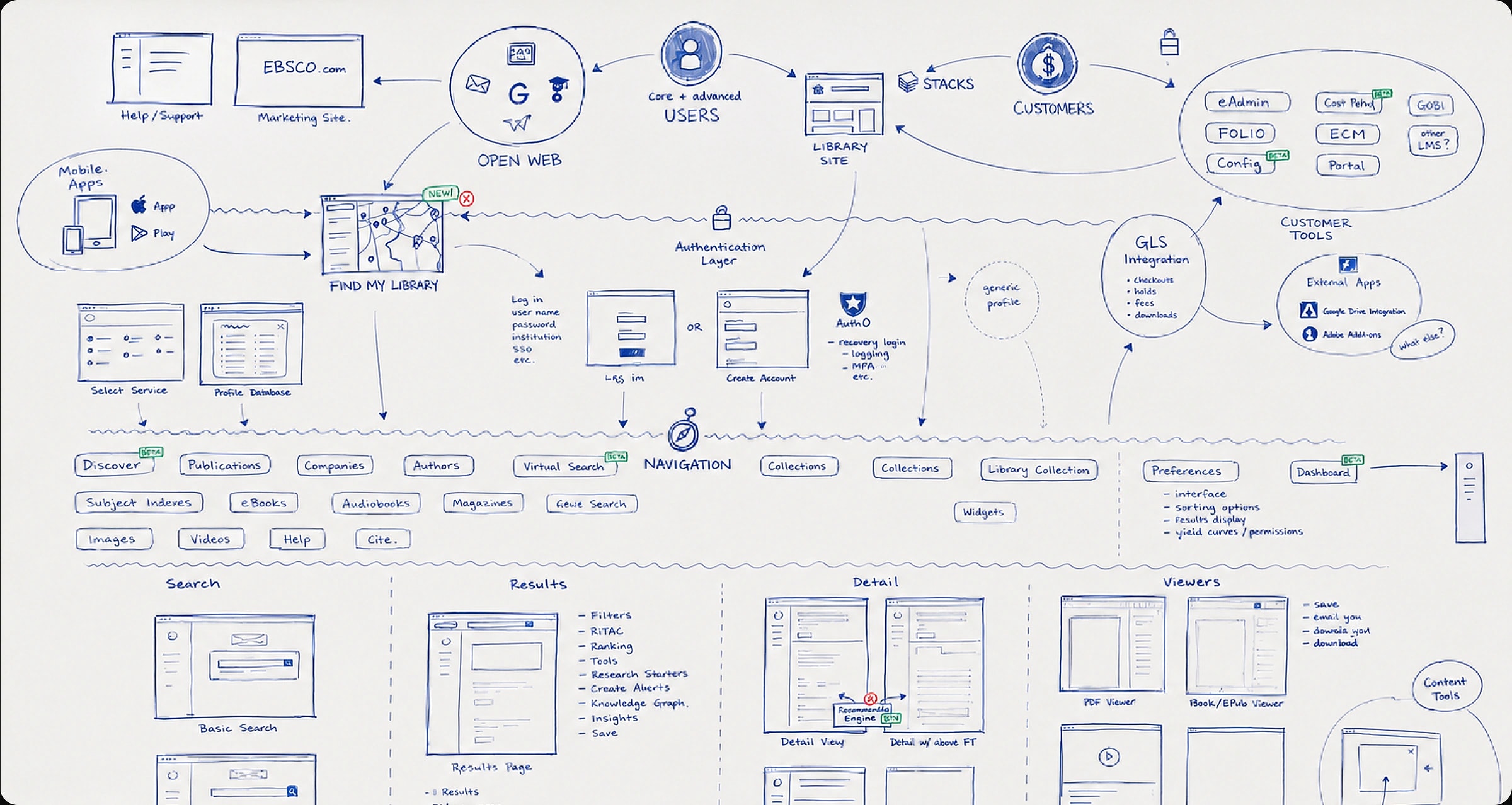
At thousands of institutions, no screen exists just once — every design decision either becomes a pattern or becomes an inconsistency. Working in a SAFe agile environment with designers, researchers, PMs, and engineers, I helped establish the reusable foundations: navigation and search experiences, accessibility standards and responsive layouts, and a shared library of UI components and interaction patterns.
The foundations made the platform consistent — and made every team that came after faster.
04 / PECAN DESIGN SYSTEM
One UX team, thirty-five dev teams.
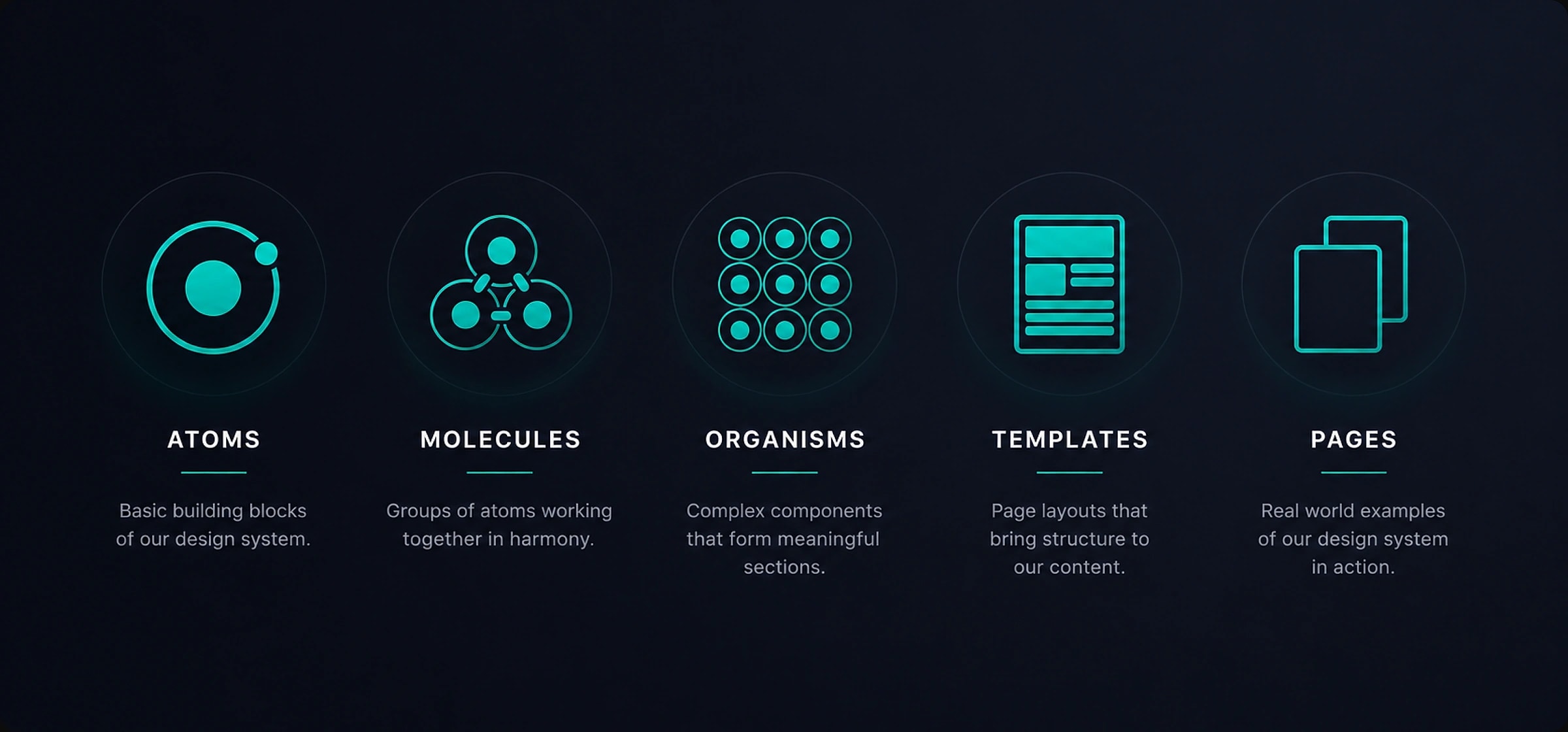
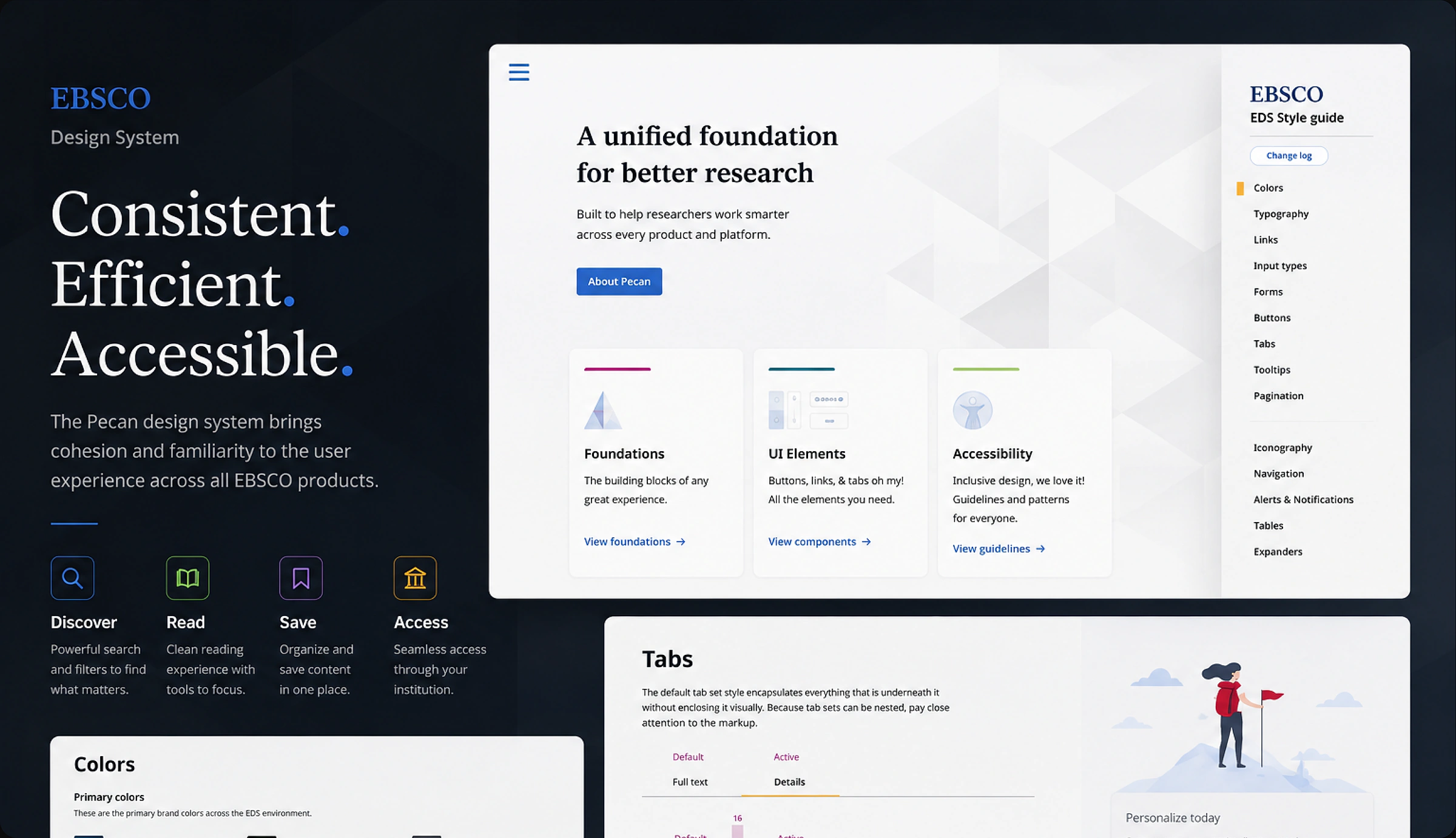
As the transformation expanded, a small UX team found itself supporting more than 35 development teams moving at different speeds. Style guides helped, but the details kept slipping between design intent and production — responsive behavior, spacing, accessibility, interaction states. Pecan, built on Atomic Design principles, became the shared foundation for designers, engineers, and product teams.
I contributed reusable components, documentation, and production HTML/CSS — shipping the system in the same language engineers build in, so design decisions survived the handoff.
05 / IMPACT
The train never stopped.
The Discovery Platform redesign and Pecan moved a mature enterprise product into the modern era: a redesign connected to hundreds of millions in revenue, a beta launch that earned a 92 System Usability Score, stronger authentication and WCAG 2.1 accessibility, and UX patterns reused across 35+ teams.
The project still shapes how I work: great experiences aren't just better interfaces — they're research, systems, collaboration, and iteration, compounding.