IZOTOPE · DESIGN SYSTEMS · BRAND
Design that ships without the designer.
iZotope builds intelligent audio tools used by musicians and producers worldwide — and by 2016, demand was outrunning the creative team. I joined as a visual designer during that growth spurt, supporting marketing, brand, and product. The work was twofold: translating machine-learning audio tech into stories creators could feel — and noticing half the design queue shouldn't exist at all.
01 / TURNING PRODUCTS INTO STORIES
Nobody buys an algorithm.
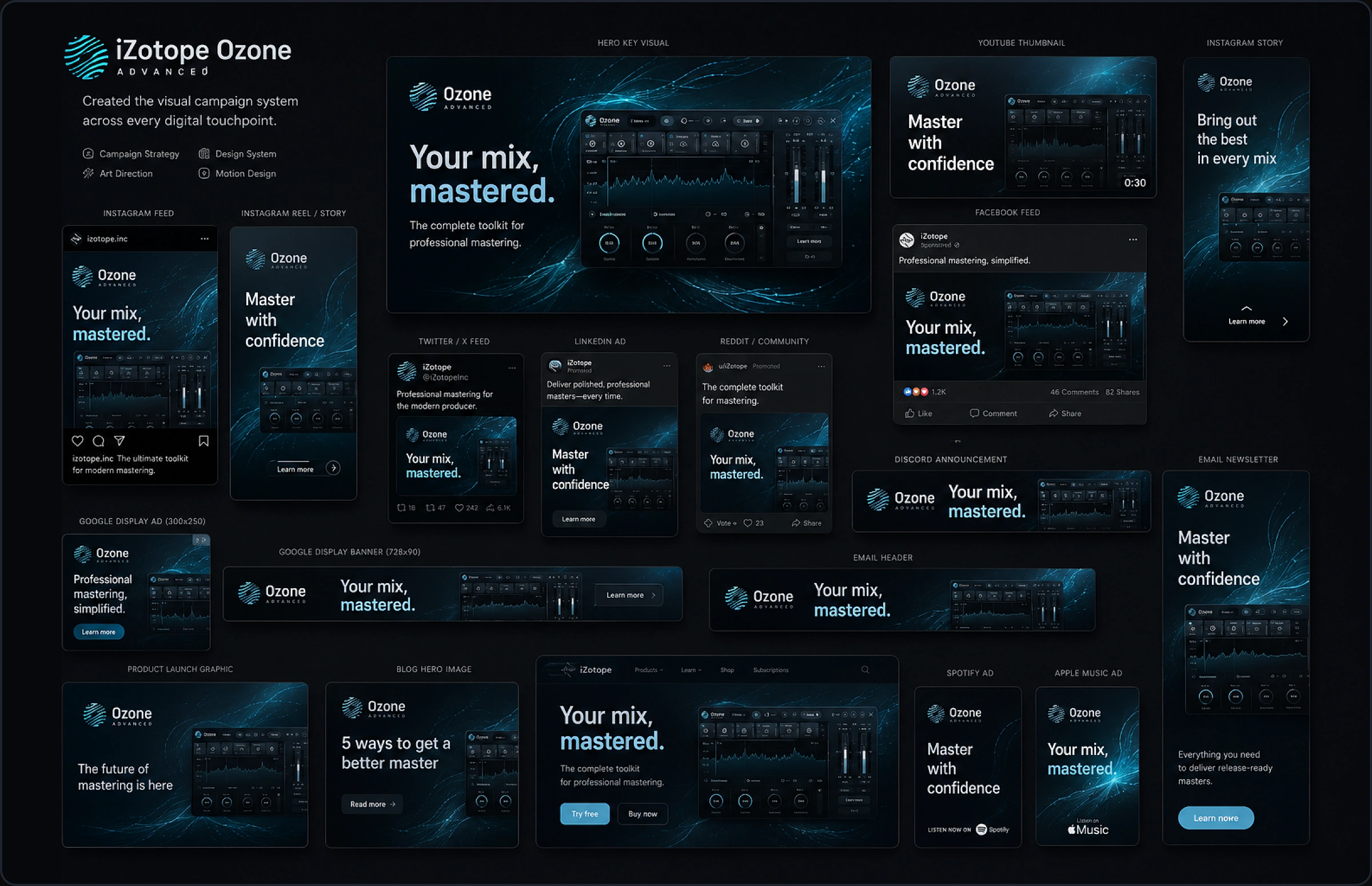
iZotope's products run on serious technology — machine learning, signal processing, years of research. But nobody hits purchase on an algorithm; creators buy the track they can suddenly finish. My job was translating technical features into stories that felt that way, partnering with marketers, designers, and engineers across:
- Product launches, digital campaigns, and paid media.
- Motion graphics and interactive prototypes.
- Event experiences and retail partner assets.
Every touchpoint had the same bar: powerful technology that feels intuitive, accessible, and creative.
02 / BUILDING SYSTEMS TO MOVE FASTER
The queue was full of patterns.
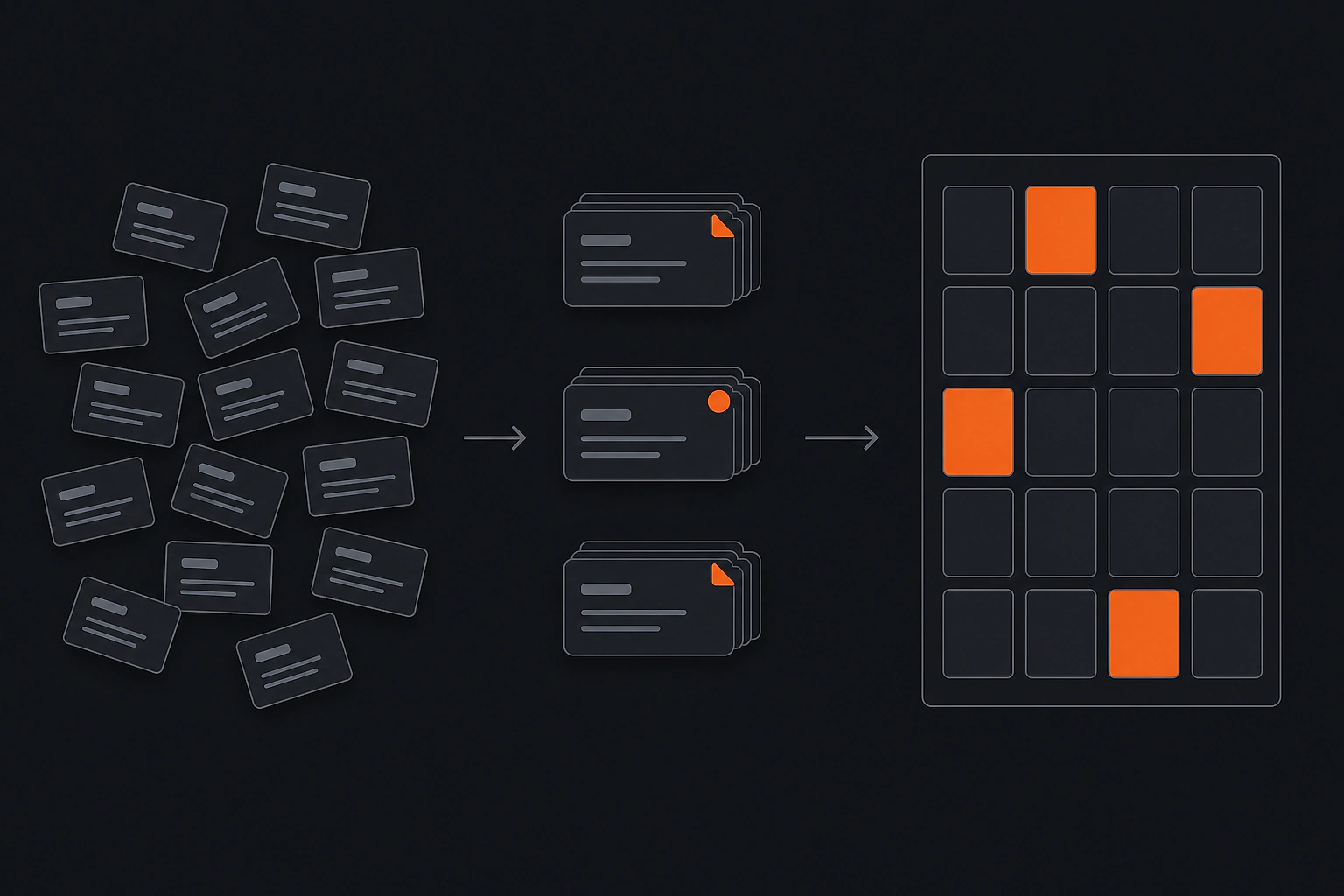
As iZotope grew, one small central team was suddenly supporting multiple product lines, global campaigns, social channels, retail partners, and international offices. The obvious ask was headcount. The queue said otherwise: read closely, it was mostly repetition — the same asset sizes, the same campaign formats, the same brand elements, requested one ticket at a time.
Most requests didn't need a designer; they needed a system. That reframe turned design from a production resource into an enablement layer — one-off tickets becoming repeatable, self-serve solutions.
03 / EMPOWERING TEAMS WITH TOOLS
Guardrails instead of gatekeeping.
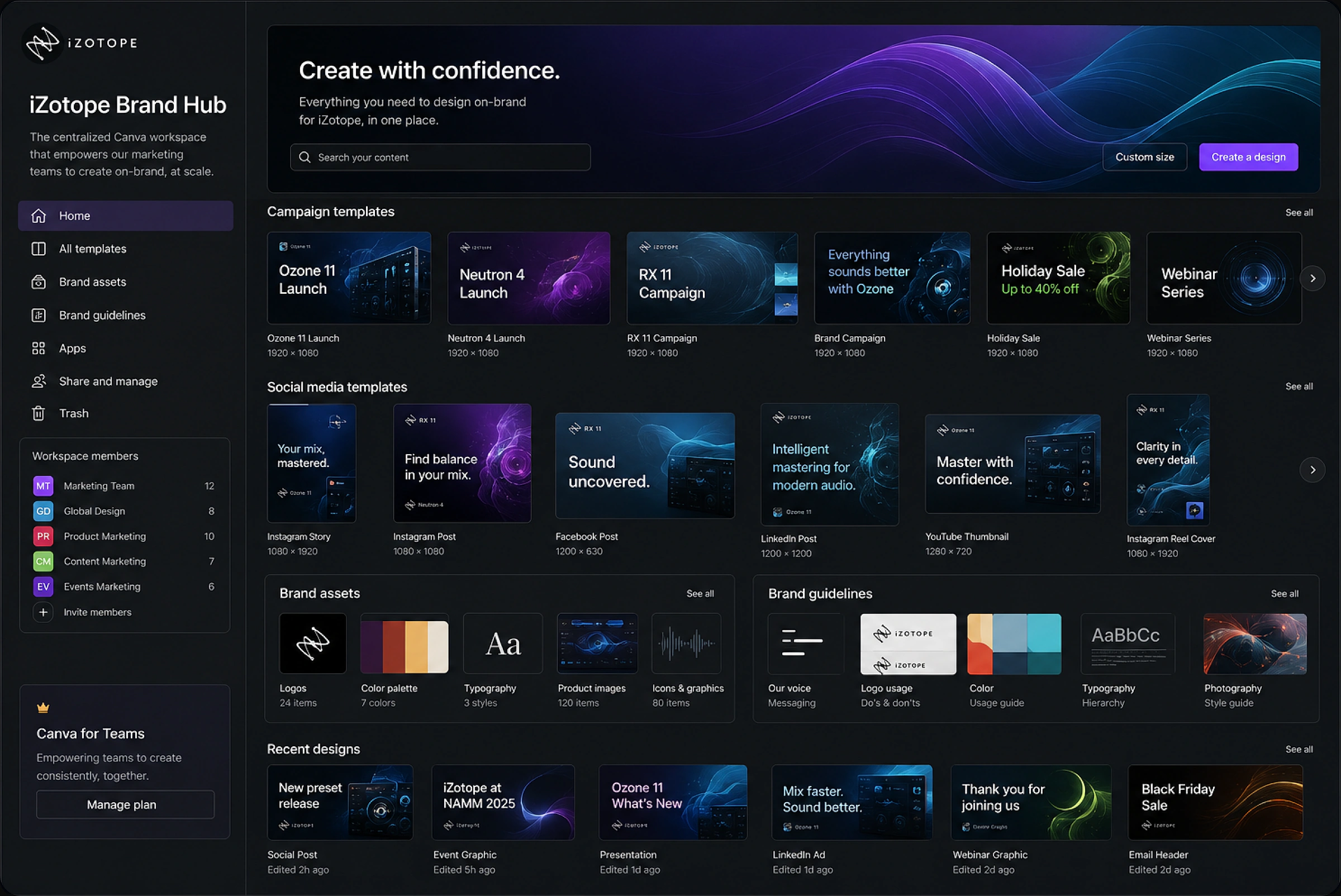
The system took shape as a shared workflow in Canva — one centralized hub where marketing teams could create on-brand without starting from scratch or waiting on the design queue:
- Reusable campaign templates that scaled across products and regions.
- Brand guidelines and approved assets, all in one place.
- Social content frameworks for fast, on-brand posting.
With the right guardrails, teams moved on their own — creative output went up, and the brand stayed consistent without a designer in the loop.
04 / CONNECTING A GLOBAL ORG
The brand couldn't live in one office.
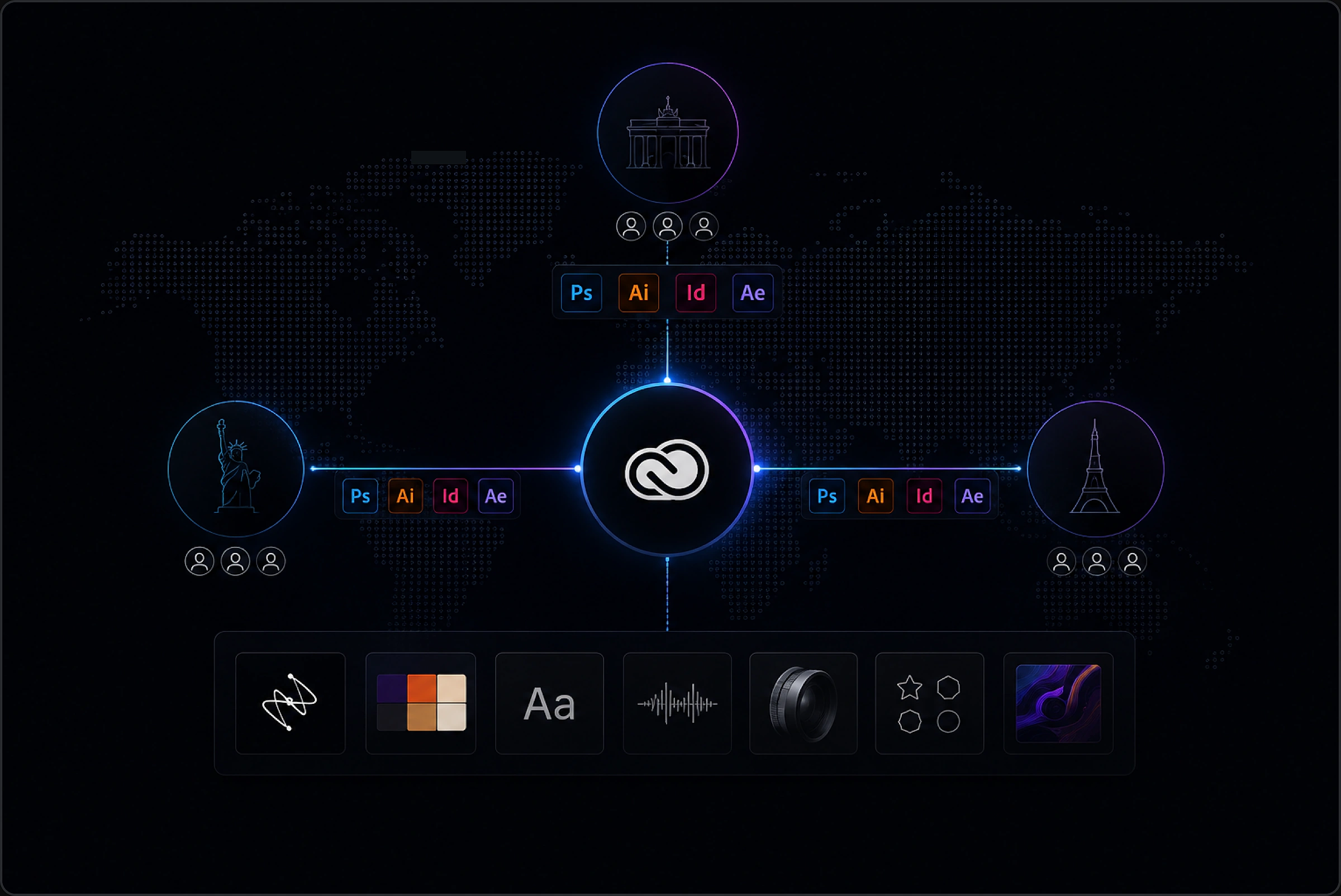
When iZotope opened offices in Germany and Japan, the in-office way of working — ask the designer who made it — stopped scaling across time zones. At Adobe MAX I studied how global creative orgs like VICE coordinate distributed production, brought the learnings back, and built shared Creative Cloud libraries: logos, icons, product imagery, templates, and brand elements, centralized once.
No more digging through old files or waiting on another time zone — every region worked from one source of truth.
05 / IMPACT
The team scaled without growing.
Design stopped being a queue and became infrastructure:
- Global product launches and campaigns shipped with every region on brand.
- Reusable brand systems adopted across teams.
- US, Germany, and Japan working from one shared library.
- Marketing and social creating independently — no design queue for routine work.
Output scaled, headcount didn't — and the systems work grew my role from visual design into product experience.