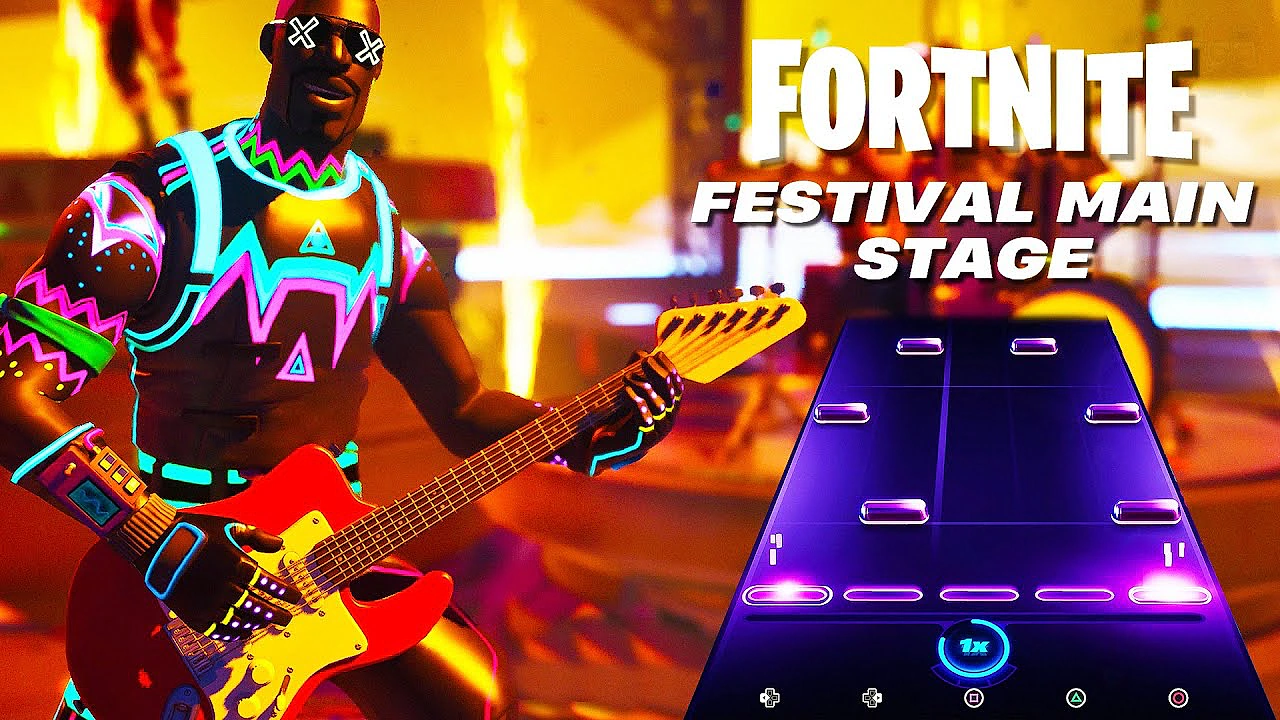
FORTNITE FESTIVAL MAIN STAGE · UXUI
Rhythm gameplay for Fortnite scale.
Rock Band asked you to come to the genre — a disc, a plastic guitar, a living room cleared for the band. Fortnite Festival Main Stage, built with Harmonix, reversed it: full rhythm gameplay — solo or in a band of four, playing licensed hits and original tracks — dropped inside a game hundreds of millions already own, on whatever they're already holding. The UX problem was never building a rhythm game. It was making one feel native to people who never asked for it.
SOURCES · EPIC GAMES HELP · WIKIPEDIA
01 / CORE MECHANICS
From first tap to fifth lane.
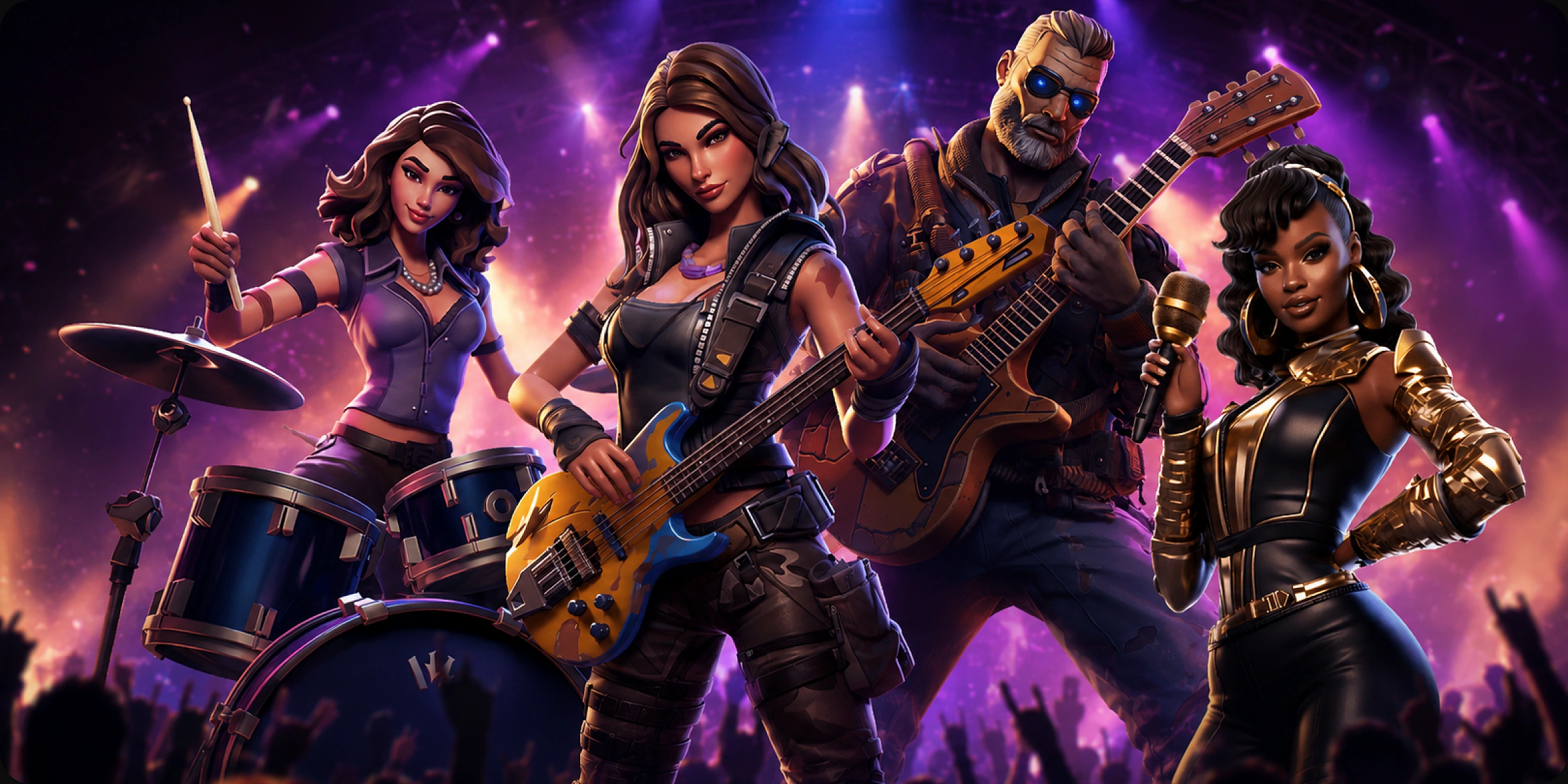
Players match scrolling notes to licensed hits and original tracks — simple to describe, hard to scale. The same song has to hold a first-timer tapping through Easy and a Rock Band veteran chasing a full combo on Expert, and it can never feel like two different games. That range comes from a few deliberate systems:
- Selectable instruments — Lead, Bass, Drums, or Vocals, plus Pro Lead and Bass tuned for guitar controllers.
- Local co-op — four-player split-screen on PS and Xbox, so the living-room band survived the move to Fortnite.
- A rotating Daily Jam Tracks library across four tiers, from Easy up to Expert.
02 / MY CONTRIBUTIONS
Where Harmonix met Fortnite.
Harmonix arrived with twenty years of rhythm-game instincts. Fortnite arrived with its own gravity — established patterns, input conventions, and an audience that expects everything to feel like one game. My work as a UX Designer on the Festival team lived at that meeting point: wireframing, prototyping, and defining the interaction models that let Main Stage keep the genre's depth while behaving like it had always been part of Fortnite — working day to day with product managers, engineers, and the Harmonix gameplay team.
The hands-on work fell into three pillars:
03 / GAMEPLAY UX
Seeing the song before you hear it.
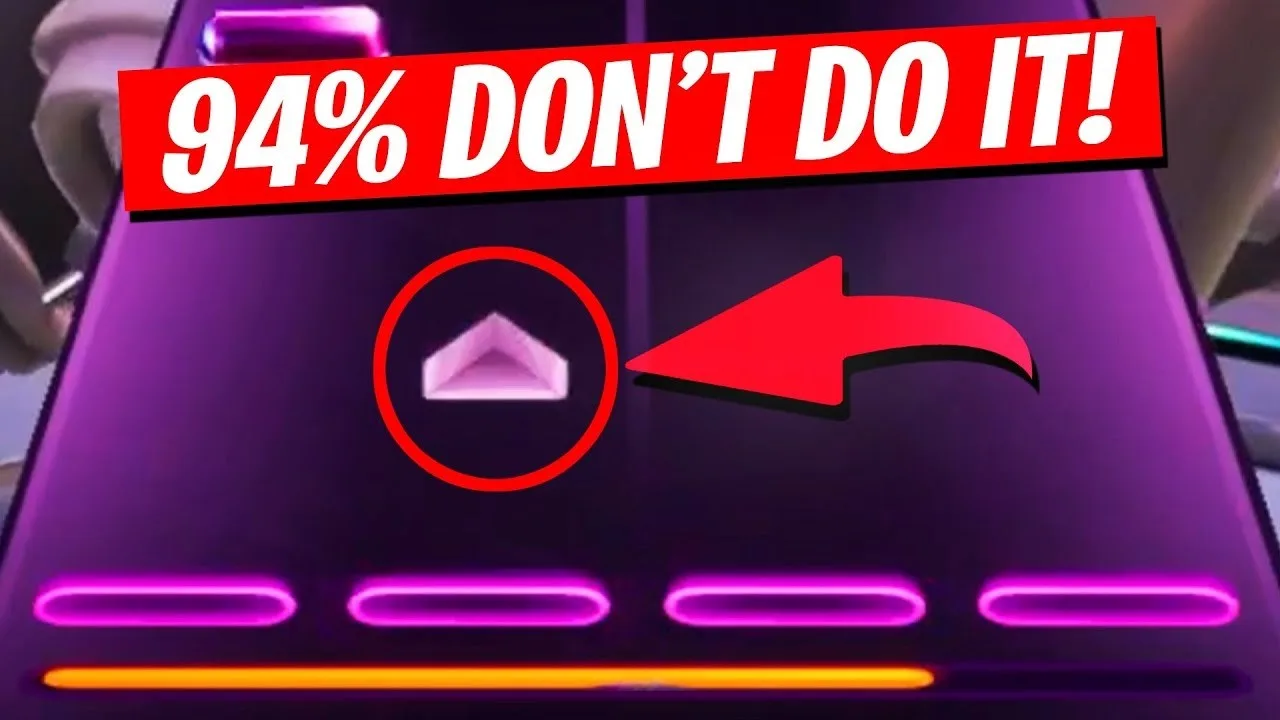
The note highway is an odd piece of interface: it renders the next few seconds of a song as geometry, and the player's score depends on trusting it completely. At that level of trust, readability isn't polish — it's the mechanic. My work here:
- Prototyping the note highway — translating Rock Band's lane mechanics into the Fortnite engine through iterative wireframes and prototypes, tuned for readability on PC, console, and mobile.
- Real-time feedback — HUD layouts for score multipliers, streaks, and overdrive triggers: loud enough to celebrate, quiet enough to never pull your eyes off the next note.
04 / PERIPHERAL & HARDWARE UX
When the instrument is real.
Festival's hardest edge case is physical: a plastic guitar plugged into a free-to-play game. The moment it connects, every prompt on screen is wrong until the interface adapts — and the player's timing depends on a calibration step most games bury in settings. My work here:
- Onboarding & adaptive input — flows for connecting guitars, USB mics, and drum kits, with logic that swaps every button prompt the instant a plastic instrument is detected.
- Calibration made human — refined the step-by-step audio / video latency tool into a flow players can finish without ever needing to understand the word “latency.”
05 / ECOSYSTEM INTEGRATION
Four players, one setlist.
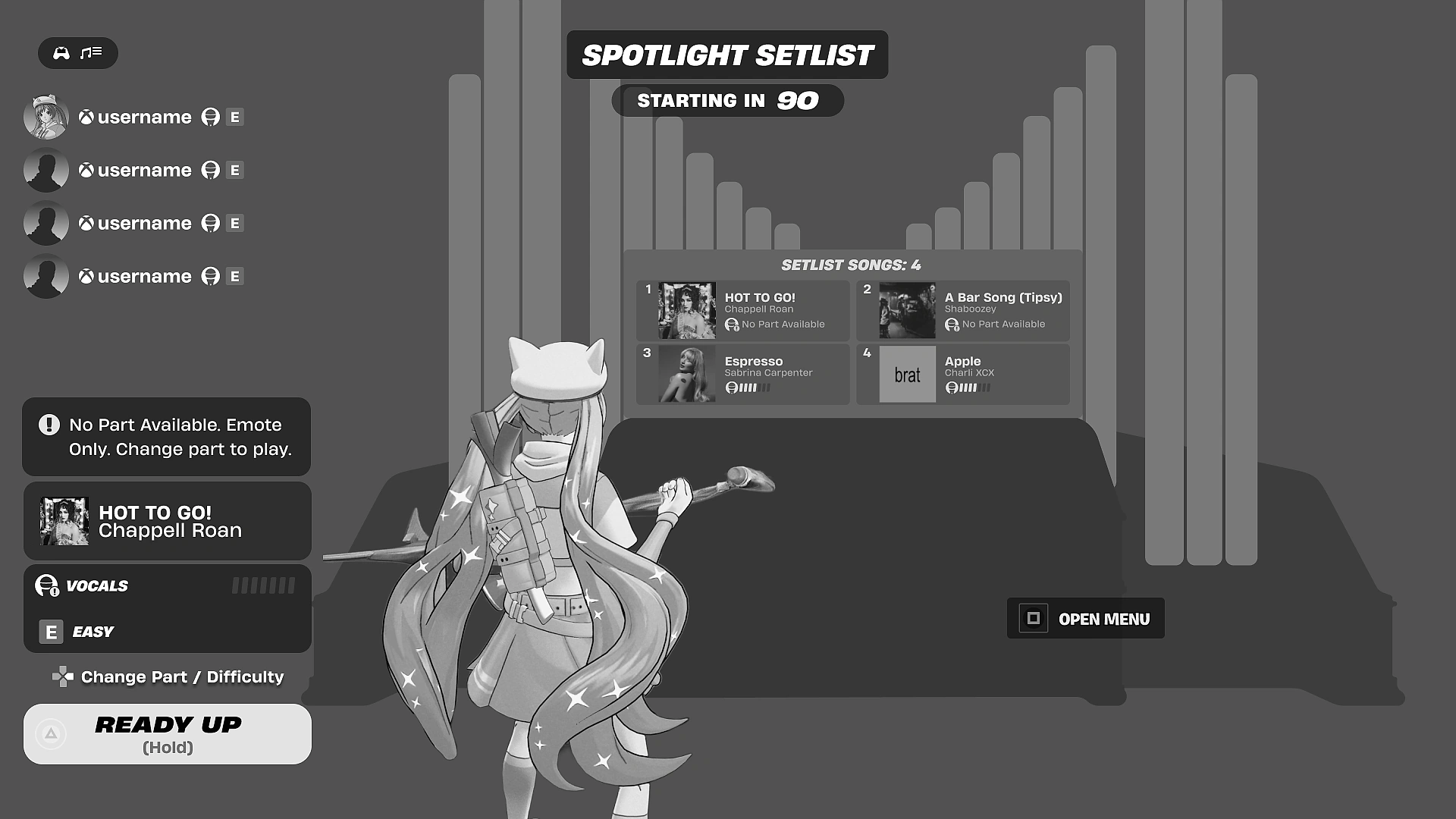
The last test of “native” isn't the gameplay — it's everything around it. A band is four people negotiating in real time: who sings, who drums, what gets played next. And a keytar in your Locker has to feel as ordinary as a skin. My work:
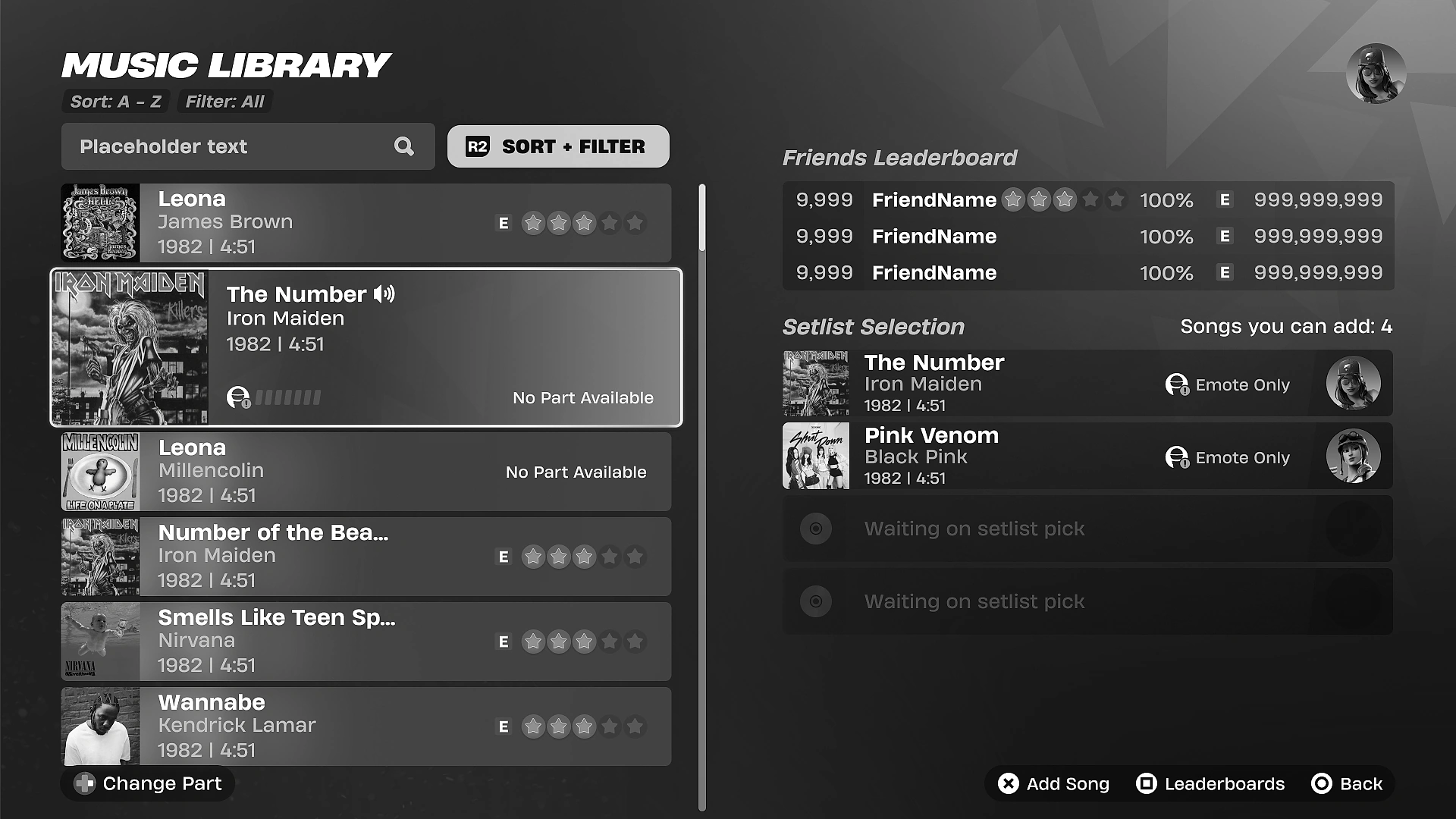
- Lobby & setlist flow — the multi-user lobby where four players concurrently pick instruments and difficulty, and vote a shared setlist into existence.
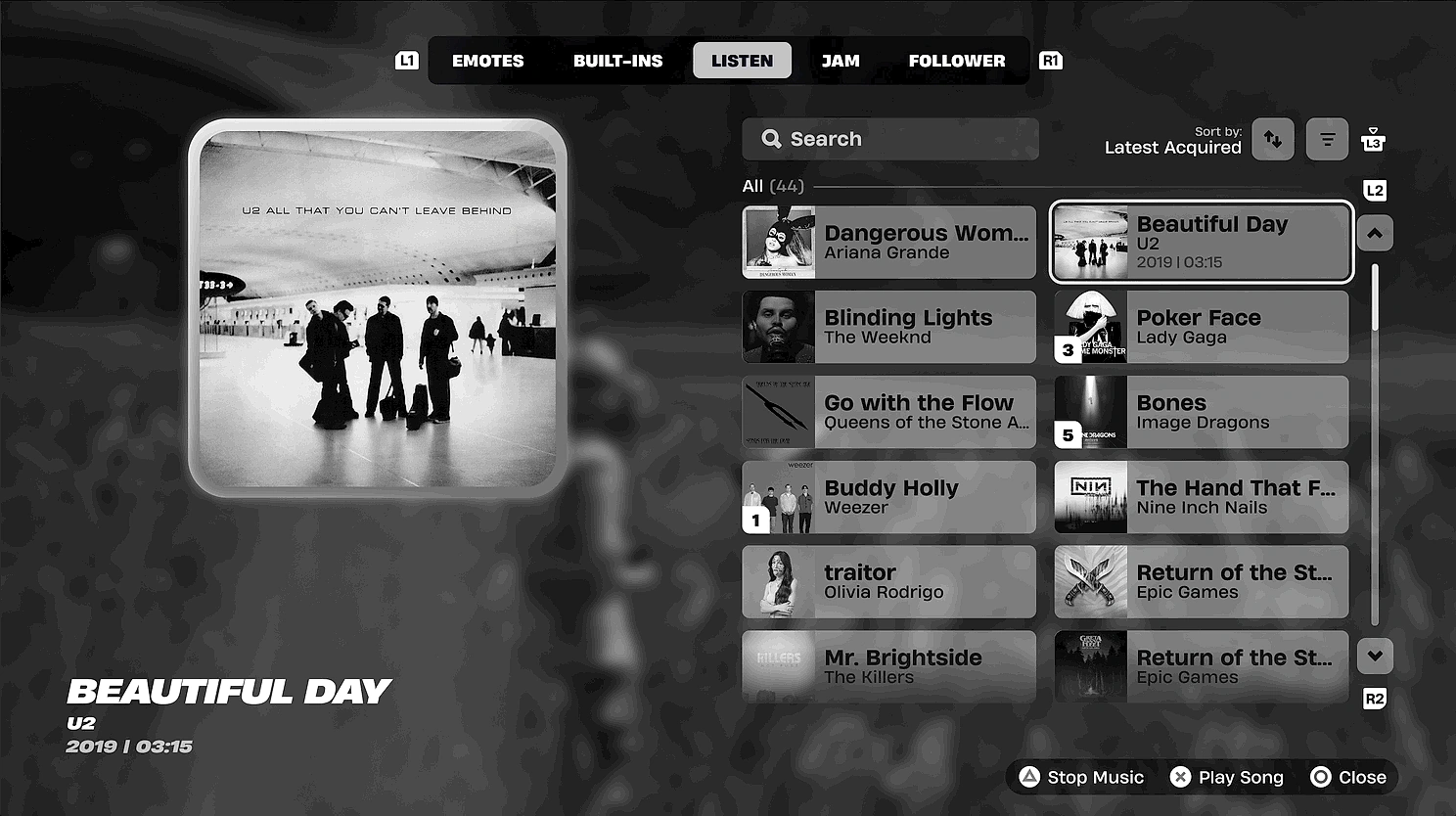
- Locker & cosmetic systems — contributed to the Locker's UX architecture so new categories — guitars, keytars, drums, and Jam Tracks — read as Fortnite, not as a bolted-on mode.
06 / DESIGN IMPACT
Two audiences, neither compromised.
A mode like this can fail in two directions: overwhelm the millions who've never played a rhythm game, or flatten it until the genre's veterans walk away. Main Stage gets judged by both — the player tapping through their first song on a phone, and the Rock Band lifer chasing a full combo on a guitar controller.
- Genre accessibility — lowered the barrier so traditional Fortnite players could fall into rhythm gameplay mid-session, no manual required.
- Cross-input parity — one flexible interface system holding functional parity across touchscreen, controller, and guitar peripheral.
Across inputs and skill levels, Main Stage holds up at Fortnite scale — effortless for newcomers, faithful for veterans.
07 / IN THE WILD
Watch it in action
See the Main Stage mechanics in action across instruments, platforms, and skill levels: