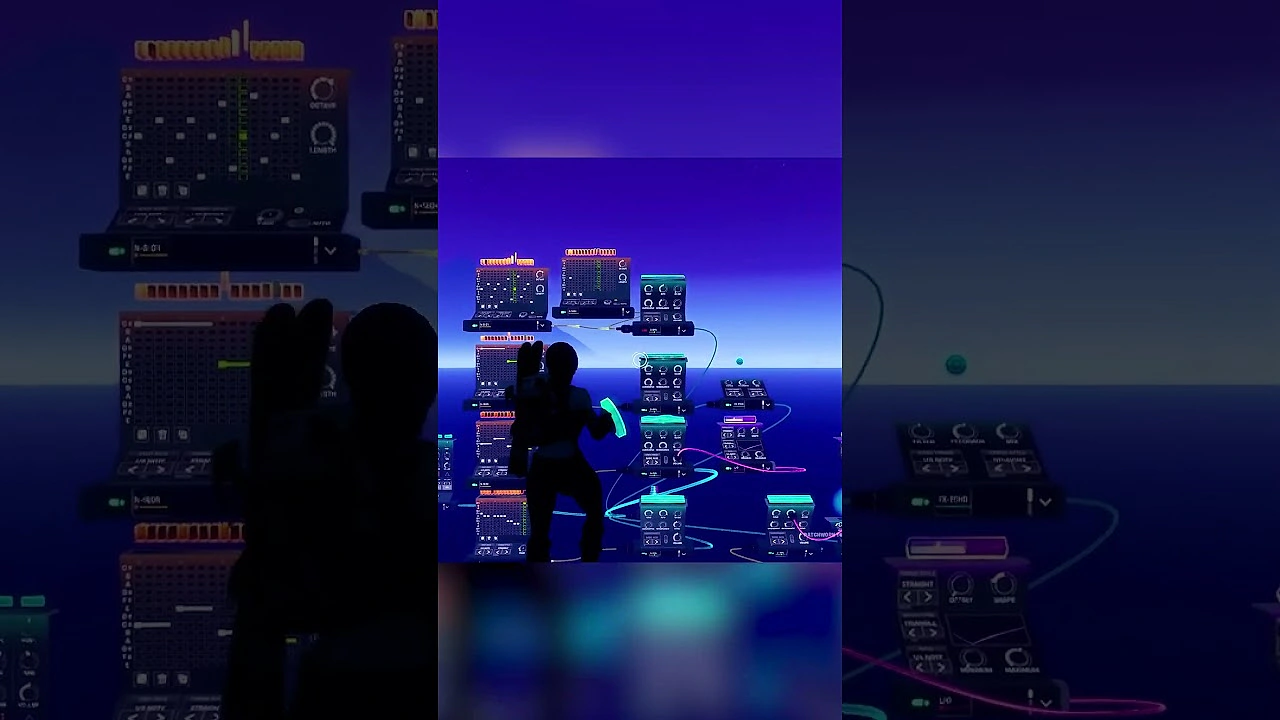
FORTNITE PATCHWORK · UXUI
The deep end of music-making, made playable.
Modular synthesizers are the most intimidating instruments in music — walls of cables and knobs that scare off even trained musicians. Patchwork's bet was that the cable is secretly the most game-like thing about them. A suite of music-creation devices in Fortnite Creative and UEFN, it lets creators wire sequencers, synths, and effects into working signal chains — composing original music and binding it to gameplay, so the soundtrack reacts to the match itself.
01 / HOW IT WORKS
The cable is the interface.
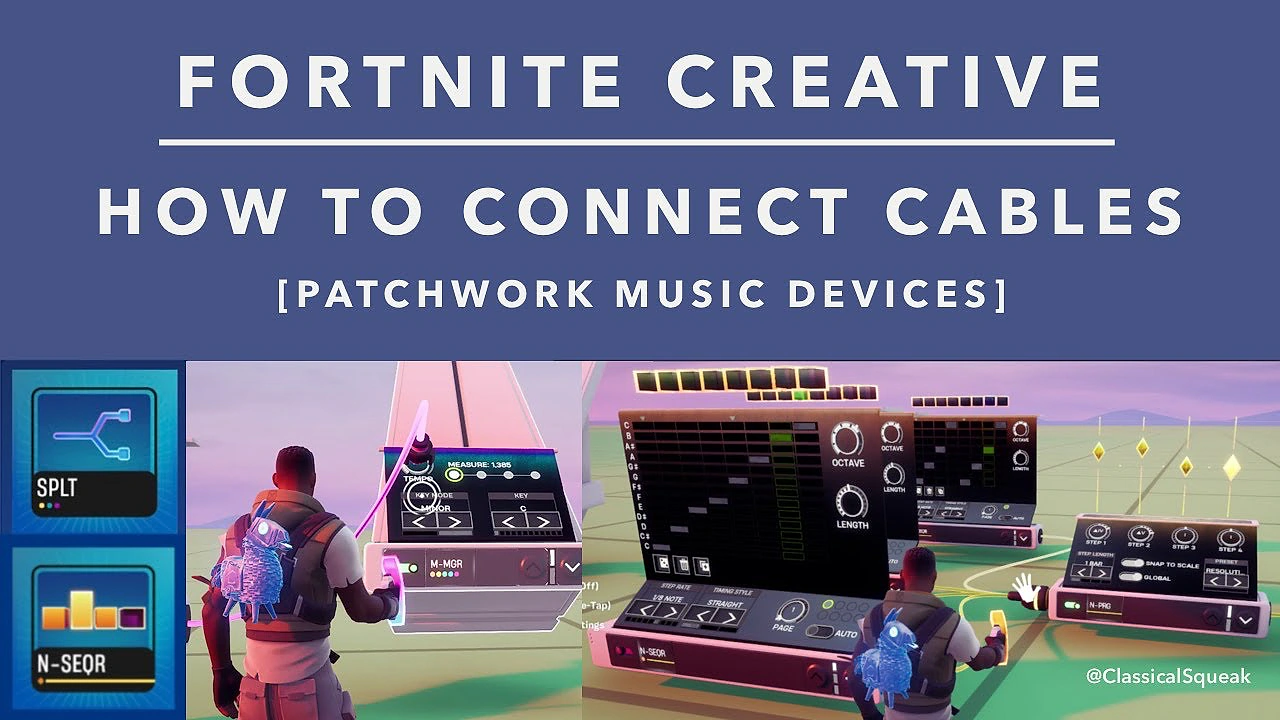
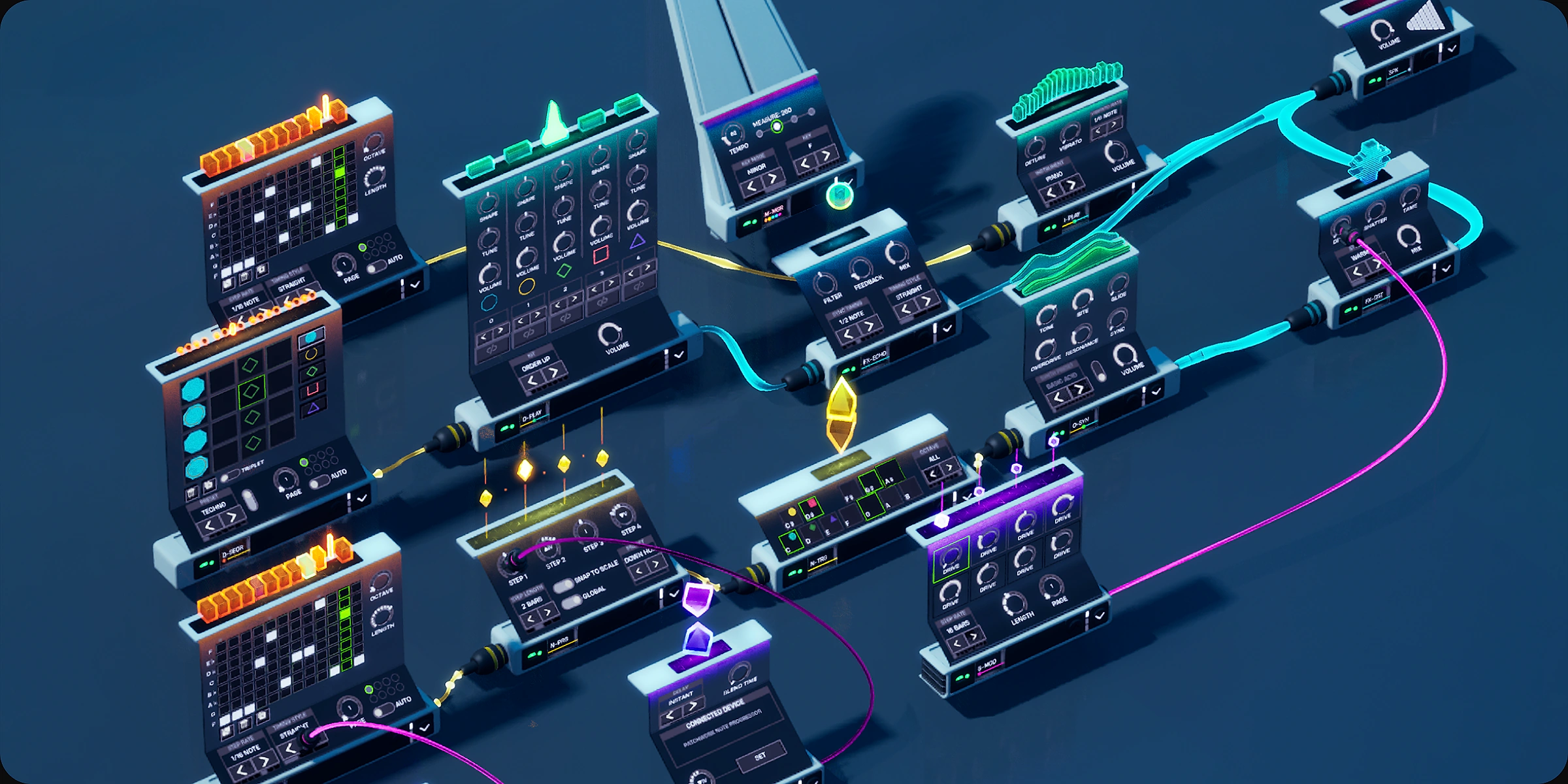
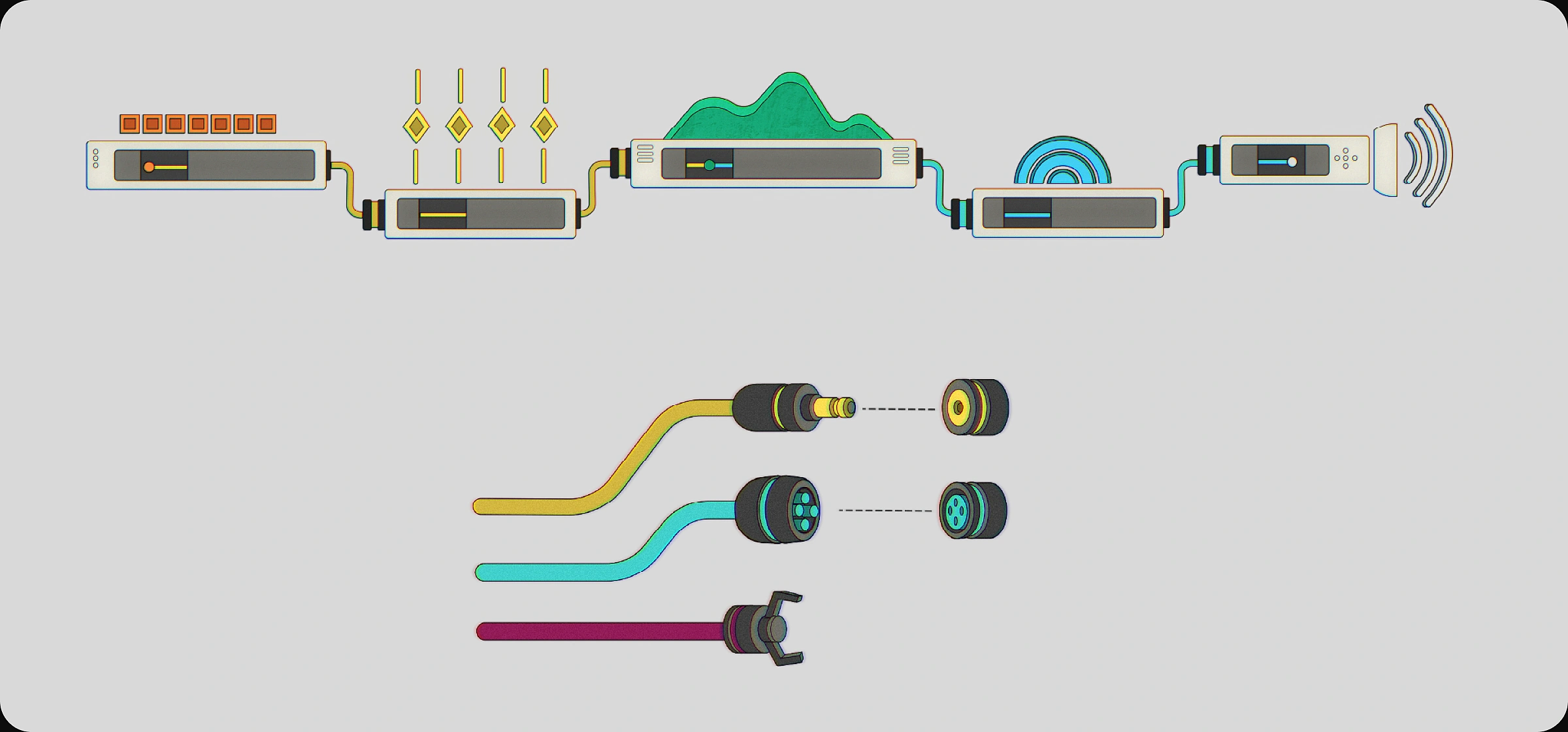
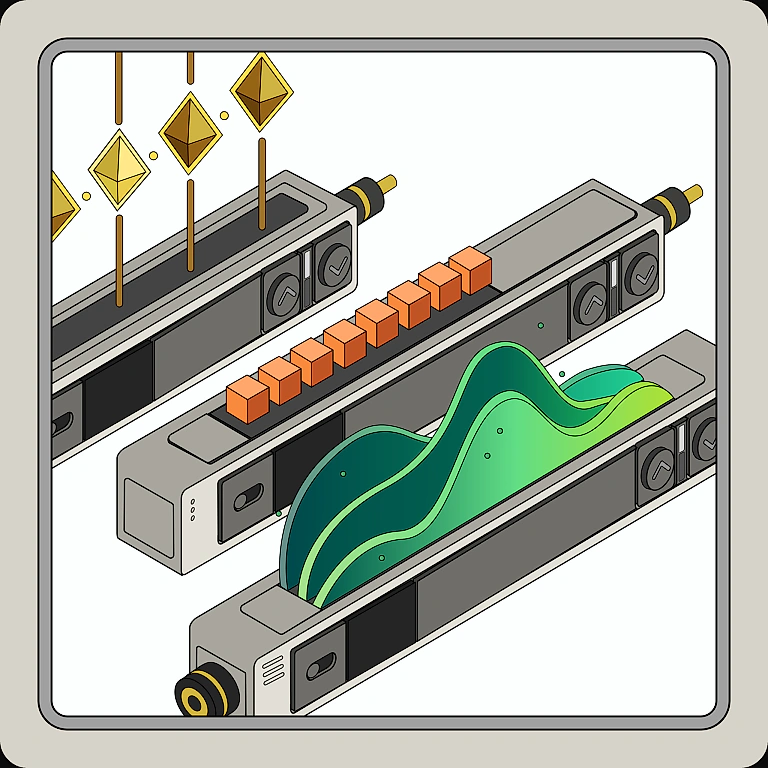
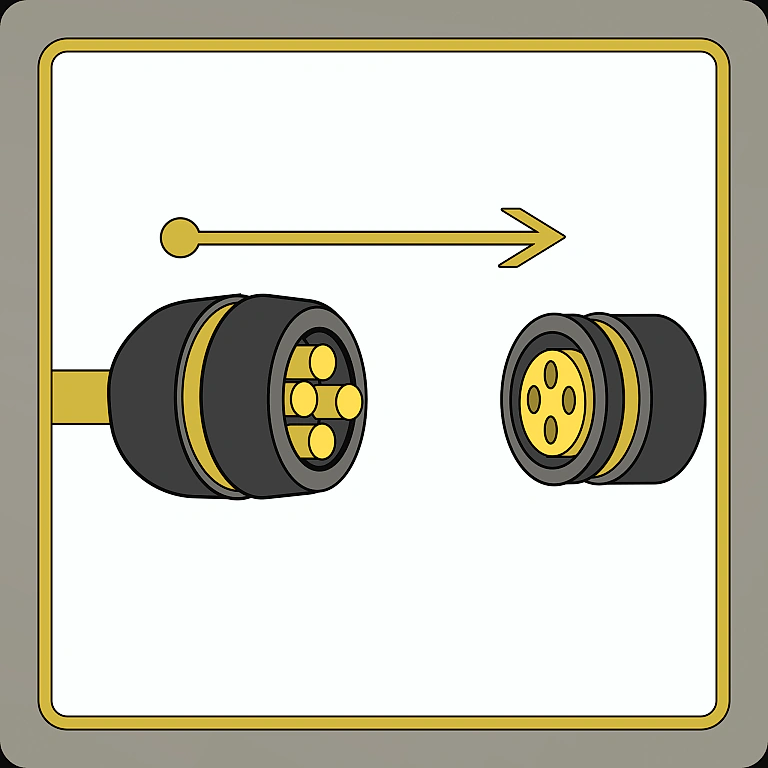
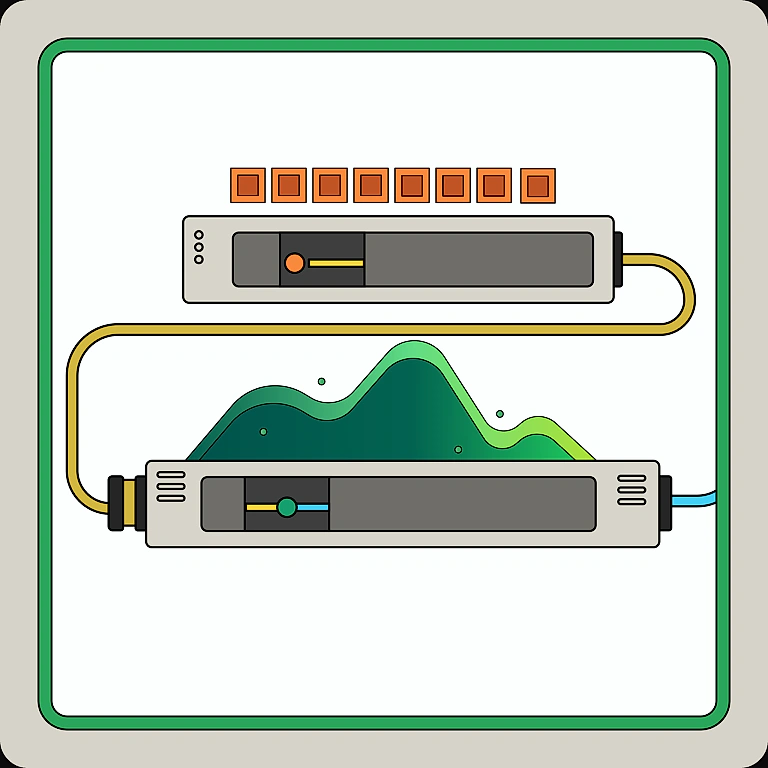
Creators equip a Patchwork Tool, then wire device boxes together the way an audio engineer would — dragging a virtual cable from one machine's output into another's input. The signal flow is real: what you patch is what you hear. A working track usually chains a few core modules:
- Music Manager — the master unit: global tempo, key, and major / minor mode for the whole map.
- Sequencers — the Note Sequencer lays melodies, basslines, and chords on a visual grid; the Drum Sequencer handles rhythms and loops.
- Effects & Speaker — Distortion, Echo, and FX filters shape the sound before the Speaker broadcasts it locally or island-wide.
- Players & Synths — the Instrument Player and Omega Synthesizer turn note data into actual audio.
02 / ADAPTIVE GAMEPLAY
Gameplay is the final patch cable.
The last input isn't musical at all. Patchwork wires into Fortnite's Direct Event Binding system, so play itself drives the sound: opening a chest, entering a zone, or taking damage can shift the soundtrack in real time — cranking the tempo, flipping major to minor, kicking in distortion mid-combat. The score stops being a backing track and becomes part of the game's logic.
03 / MY ROLE
Designing the on-ramp.
Patchwork started as an engineer's prototype — proof that modular synthesis could live inside Fortnite. I joined as its primary UX Designer and carried it from that prototype to a shipped feature across Creative and UEFN, translating audio-engineering ideas into mechanics anyone can play:
- Device UX — the UX framework and UI flows for the entire device ecosystem, turning the high-friction world of modular synths into a gamified sandbox — one journey from first cable to final mix.
- Tactile controls — designed and prototyped the oversized knob-first control language used across every device, so tweaking a synth feels physical on a gamepad.
- Technical integration — learned Unreal Engine and MetaSounds to prototype in-engine, design within real constraints, and push for tight audio-visual sync.
04 / IN THE WILD
Watch creators wire it up.
See the devices wired up and original music built in Fortnite Creative: